
Indian stock market benchmarks Sensex and Nifty rebounded by over 1% on Monday, driven by value-buying in banking stocks after a three-day slump. Key gainers included UltraTech Cement, HDFC Bank, and Mahindra & Mahindra.

Banking operations at public sector banks across the country were impacted on Tuesday as the United Forum of Bank Unions (UFBU) went on nationwide strike demanding the immediate implementation of a five-day work week.

Indian equity benchmark indices Sensex and Nifty tumbled over 1 per cent for the third consecutive day, driven by a sharp rally in crude oil prices, massive selling in IT stocks, and unabated foreign fund outflows amid ongoing geopolitical tensions in the Middle East.
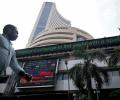
From the Sensex pack, Asian Paints, ICICI Bank, PowerGrid, Larsen & Toubro, Bajaj Finserv, Bharti Airtel, Sun Pharmaceuticals, Maruti Suzuki India, Axis Bank, UltraTech Cement and HCL Technologies were the only gainers. On the other hand, Eternal, Tata Motors' commercial vehicles arm, Mahindra & Mahindra, Tata Steel, Bharat Electronics Ltd, Tata Motors Passenger Vehicles, Trent, Tata Consultancy Services, Hindustan Unilever, and Infosys were among the laggards.

Indian stock market indices Sensex and Nifty experienced a significant drop in early trade, reversing a three-day rally. The decline was triggered by a sharp increase in crude oil prices, weak global market trends, and continuous outflows of foreign funds.

Indian equity markets experienced a significant downturn as geopolitical tensions in West Asia, rising oil prices, and foreign fund outflows dampened investor confidence. The Sensex and Nifty both fell sharply in early trade, reflecting broader global market weakness.

Saudi Arabia and the UAE are actively pushing Trump to take the war to its bitter finish and 'erase' Iran's presence in the geopolitics of the region. Simply put, the two most powerful Sunni Arab oligarchies are on the same page as Israel. Such interference increases the risk of a breakdown in dialogue between the US and Iran, points out Ambassador M K Bhadrakumar.
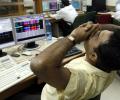
Indian benchmark indices Sensex and Nifty experienced a sharp decline in early trading due to escalating tensions in the Middle East, driving crude oil prices higher. Global market bearishness and foreign fund outflows further contributed to investor unease.

Indian stock markets extended their gains for a third consecutive day, with the Sensex climbing 753 points and the Nifty closing above 24,550, driven by a drop in crude oil prices and optimism surrounding potential peace talks between Iran and the US.

The Indian rupee saw a significant appreciation against the US dollar following President Trump's suspension of military strikes against Iran and the Reserve Bank of India's decision to maintain its key interest rate. Market sentiment was further buoyed by positive comments from the RBI regarding the health of the banking sector.

Indian equity benchmarks, Sensex and Nifty, ended lower after a spectacular rally, with the Sensex tumbling 931 points, as renewed tensions in West Asia, particularly the risk to the ceasefire deal after Iran closed the Strait of Hormuz, dampened investor optimism.

Among Sensex firms, Maruti, Axis Bank, Larsen & Toubro, ICICI Bank, Bharti Airtel, Infosys, Adani Ports and Hindustan Unilever were the laggards. However, Titan, State Bank of India, Eternal and Trent were among the major gainers.

Life Insurance Corporation (LIC) , the country's largest domestic institutional investor (DII), has seen a Rs 46,000 crore erosion in the value of its equity holdings amid market downturns in July. The benchmark indices, Nifty 50 and BSE Sensex, have slipped 2.6 per cent from their June 2025-end level to 24,837 and 81,463.09 respectively.

Shares of BSE on Wednesday tumbled more than 9 per cent after its rival NSE said that all Nifty index weekly derivatives contracts will expire on Monday instead of Thursday with effect from April 4. The stock of BSE tanked 9.39 per cent to Rs 4,035.10 apiece on the National Stock Exchange (NSE).

Base revisions are technical exercises, but history shows they can significantly reshape the narrative around India's growth performance.
Among Sensex firms, HCL Tech, ICICI Bank, Titan, Trent, Kotak Mahindra Bank, Hindustan Unilever, Mahindra & Mahindra and HDFC Bank were the major laggards. However, Adani Ports, Bharti Airtel, SBI, NTPC and Sun Pharma were among the gainers.

Building a good stock portfolio is not only about picking strong companies but also about understanding how corporate actions affect your holdings. Corporate actions such as stock splits, dividends, bonus issues, rights issues, mergers, and buybacks can change a company's valuation, share price, and your ownership.
Benchmark indices Sensex and Nifty closed lower in a highly volatile trade on Thursday amid relentless foreign fund outflows and selling in blue-chip ICICI Bank. Falling for the second day in a row, the 30-share BSE Sensex declined 148.14 points or 0.18 per cent to settle at 83,311.01.
Indian benchmark equity indices experienced a significant downturn, with the Sensex plummeting over 800 points and the Nifty falling sharply, driven by rising crude oil prices, geopolitical tensions, and foreign capital outflows.
Sebi has proposed allowing depositories to mark such pledged shares as 'non-transferable' for the duration of the lock-in period, based on instructions from the issuer.

The Indian rupee weakened against the US dollar due to sustained foreign fund outflows and uncertainties in West Asia, although lower crude oil prices and a positive opening in domestic equity markets limited the losses.

Digital payments provider PhonePe has filed draft papers with markets regulator Sebi for its upcoming initial public offering (IPO) using the confidential pre-filing route. On Wednesday, the company's spokesperson said, "PhonePe Ltd has filed the Pre-filed Draft Red Herring Prospectus with Sebi and the stock exchanges, under...the Sebi ICDR Regulations in relation to the proposed initial public offering of its equity shares on the main board of the stock exchanges".

The National Stock Exchange (NSE) has offered to pay Rs 1,388 crore to the Securities and Exchange Board of India (Sebi) to settle the colocation and dark fibre cases, potentially clearing the way for its much-awaited initial public offering (IPO). This is the biggest-ever settlement plea made with the markets regulator.

The Indian rupee weakened against the US dollar due to a strengthening dollar, high crude oil prices, and foreign fund outflows amid geopolitical uncertainties.

Equity benchmark indices Sensex and Nifty experienced a significant decline, primarily driven by a selloff in IT stocks due to concerns about AI disruption and renewed worries over global trade.

LG Electronics India made a dazzling market debut on Tuesday, ending 48 per cent higher than its issue price and surpassing its South Korean parent in market value.

The post-Covid euphoria surrounding direct equity investing has ebbed in 2025. Individual investors have turned net sellers in the domestic equity market, pulling out about 8,461 crore so far this year - a sharp reversal from the record purchases seen in 2024, according to a report by the National Stock Exchange of India (NSE).

The Multi-Commodity Exchange faced disruptions to operations due to a technical issue on Tuesday, forcing it to commence trading over 4 hours late and shift operations to its disaster recovery site. The commodities bourse said that all its trading systems are now functioning normally and an investigation into the issue has been initiated on priority.

Mammootty's greatness lies not in hiding his flaws, but in turning them into his most powerful acting tools, observes Sreehari Nair.
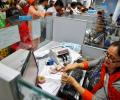
Led by the country's biggest lender State Bank of India (SBI), public sector banks logged a record cumulative profit of Rs 52,603 crore in the third quarter of the current fiscal, reflecting an 18 per cent year-on-year growth.
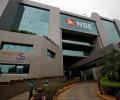
The National Stock Exchange on Monday said broadcast has resumed normally in Nifty and Bank Nifty indices after the prices had stopped updating in the two indices in the early morning trade.

Indian equity markets closed higher, driven by gains in PSU bank, auto, and financial stocks, following the US Supreme Court's decision on tariffs. Sensex climbed 479.95 points to 83,294.66, and Nifty advanced 141.75 points to 25,713.
Benchmark equity indices Sensex and Nifty extended their gains for the third straight session on Wednesday, driven by last-hour buying in bank, metal, and FMCG shares.

From the 30-Sensex firms, InterGlobe Aviation, Sun Pharma, Asian Paints, Reliance Industries, Hindustan Unilever, and Tata Steel were among the biggest laggards. However, Trent, UltraTech Cement, Maruti, and Power Grid were among the gainers.

The group companies now lead the market capitalisation league table in sectors such as ports, power generation, gas distribution and transmission, and power transmission and distribution, ahead of incumbents in both public and private sector. This has Gautam Adani family the second wealthiest in business in India.

Stock market regulator Sebi's board on Friday cleared significant reforms, focusing on IPO regulations, simplified entry for foreign investors, and a new framework for anchor investors in public issues.

FSN E-Commerce Ventures, the parent company of Nykaa, anticipates its consolidated net revenue for Q4 FY26 to achieve high 20 per cent year-on-year growth, marking its strongest performance in 12 quarters, fueled by accelerated growth in both its fashion and beauty verticals.

Unless the primary market momentum slows, smallcap stocks will stay subdued.

'It was diminishing even before Trump came to power.' 'The US was at the centre of the global economy. That position is going to become less and less important and less central.'

A record amount of pension money may be finding its way into the stock market, if buying figures in the National Stock Exchange (NSE) data are any indication. Category inflows touched Rs 37,409 crore for the three months ending September 2025, shows an analysis of NSE data.
